Historic M8.8 Earthquake in Kamchatka, Russia: What It Means for Geoscience
A Megathrust Earthquake Shakes the Pacific
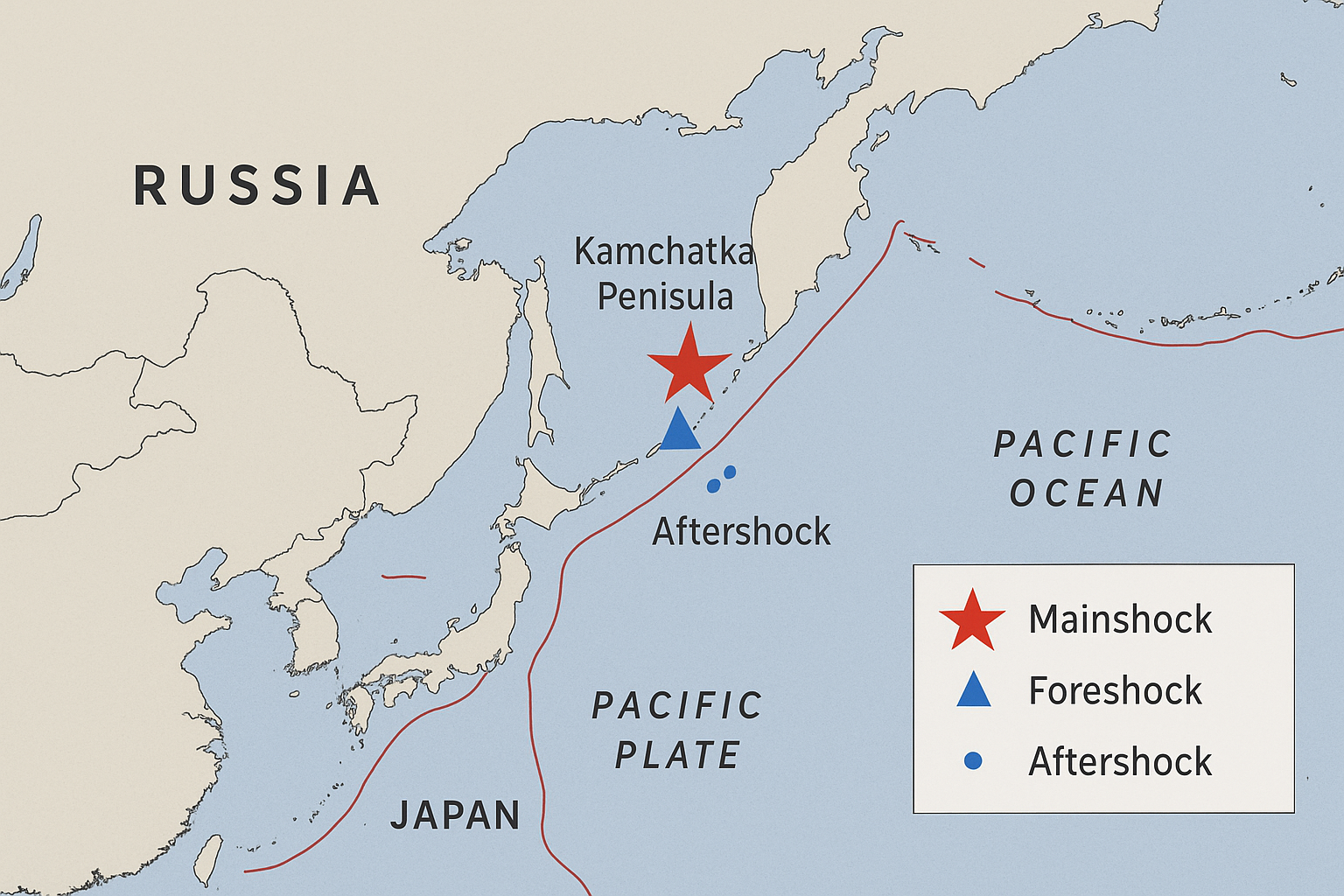
On July 30, 2025 at 11:24 a.m. local time, a massive magnitude 8.8 megathrust earthquake struck offshore the Kamchatka Peninsula, approximately 119–136 km southeast of Petropavlovsk-Kamchatsky, at a shallow depth of around 19 km Geologyin The U.S. Geological Survey (USGS) later confirmed the event as the largest global quake since 2011 and tied for the sixth strongest ever recorded in modern seismic history creators.yahoo.
Tectonic Setting and Fault Mechanics
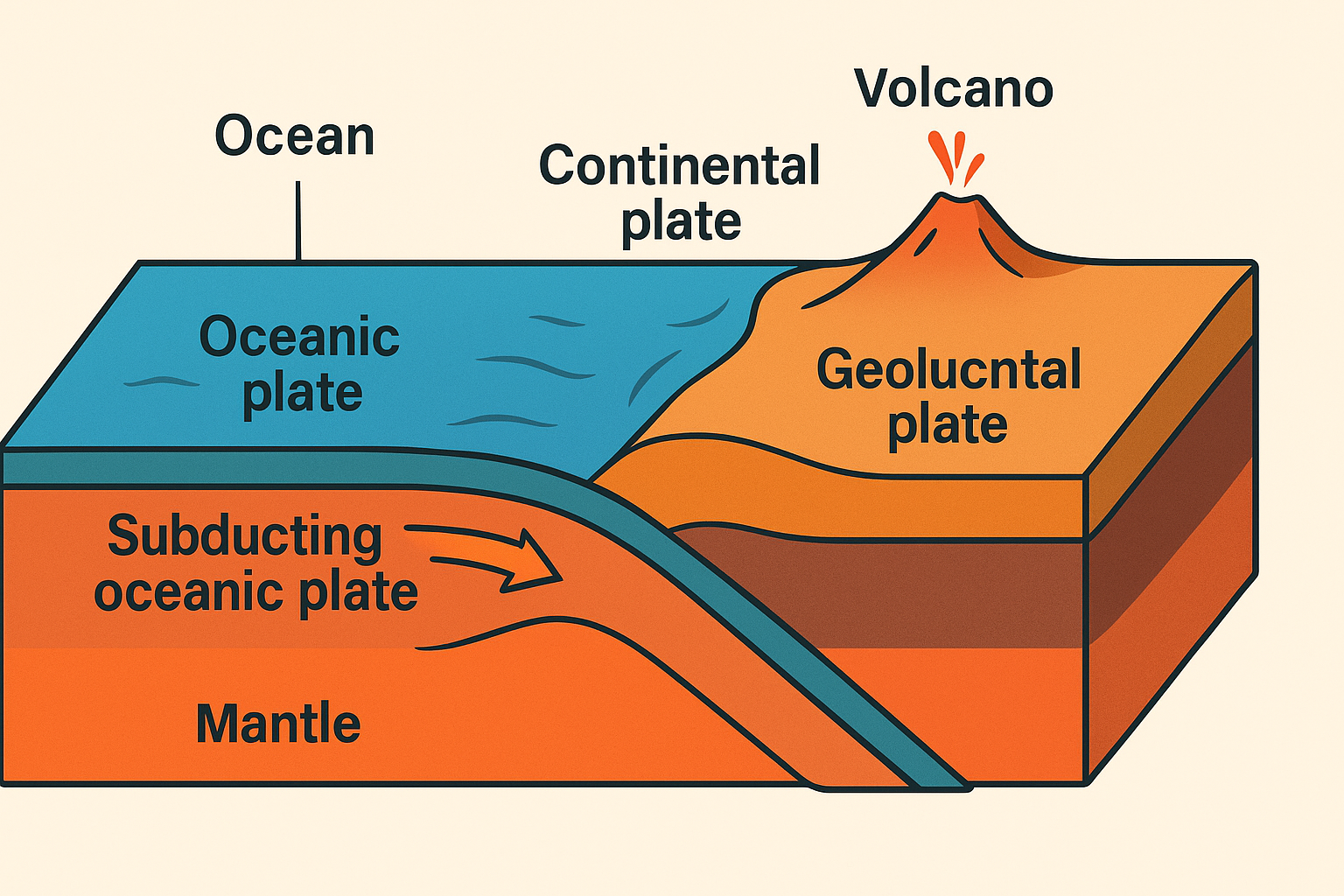
The quake occurred at the Kuril–Kamchatka Trench, where the Pacific Plate subducts beneath the Okhotsk (North America) Plate at roughly 80 mm/year Geologyin. This shallow reverse-fault event likely ruptured a ~390 × 140 km segment of the subduction interface, enabling intense seismic energy release Geologyin.
Tsunami Impact and Regional Response
Following the quake, tsunami waves of up to 4 m (13 ft) hit coastal areas in Russia, notably Severo‑Kurilsk, prompting evacuations and minor damage Reuters. Warnings were issued across the Pacific Rim—from Japan to Hawaii and the U.S. West Coast. Observed wave heights included 1.2 m in northern Japan, 1.7 m in Hawaii, and smaller impacts in California, Alaska, and the Philippines. Despite widespread alerts and evacuations, no fatalities were reported contemporaneously Financial Times.
Aftershocks & Continued Hazards
This major event was preceded by about 50 foreshocks ≥ M5.0, including a M7.4 on July 20 and several M6.6–6.9 quakes USGS. USGS forecasts point to a >99% probability of more magnitude 5–7 aftershocks within a week, and a 3–34% chance of another M7+ event occurring in the same period USGS.
Historical Context & Geological Significance
This monumental quake is now ranked alongside the 1952 Mw 9.0 Severo‑Kurilsk earthquake (Russia), the 2011 Tōhoku, Japan (Mw 9.0) event, and the massive 1960 Chile and 2004 Sumatra quakes Indiatimes. It underscores the persistent seismic volatility of the Ring of Fire, where subduction-related megathrust events dominate the global record.
Volcano Triggering: An Unexpected Duo
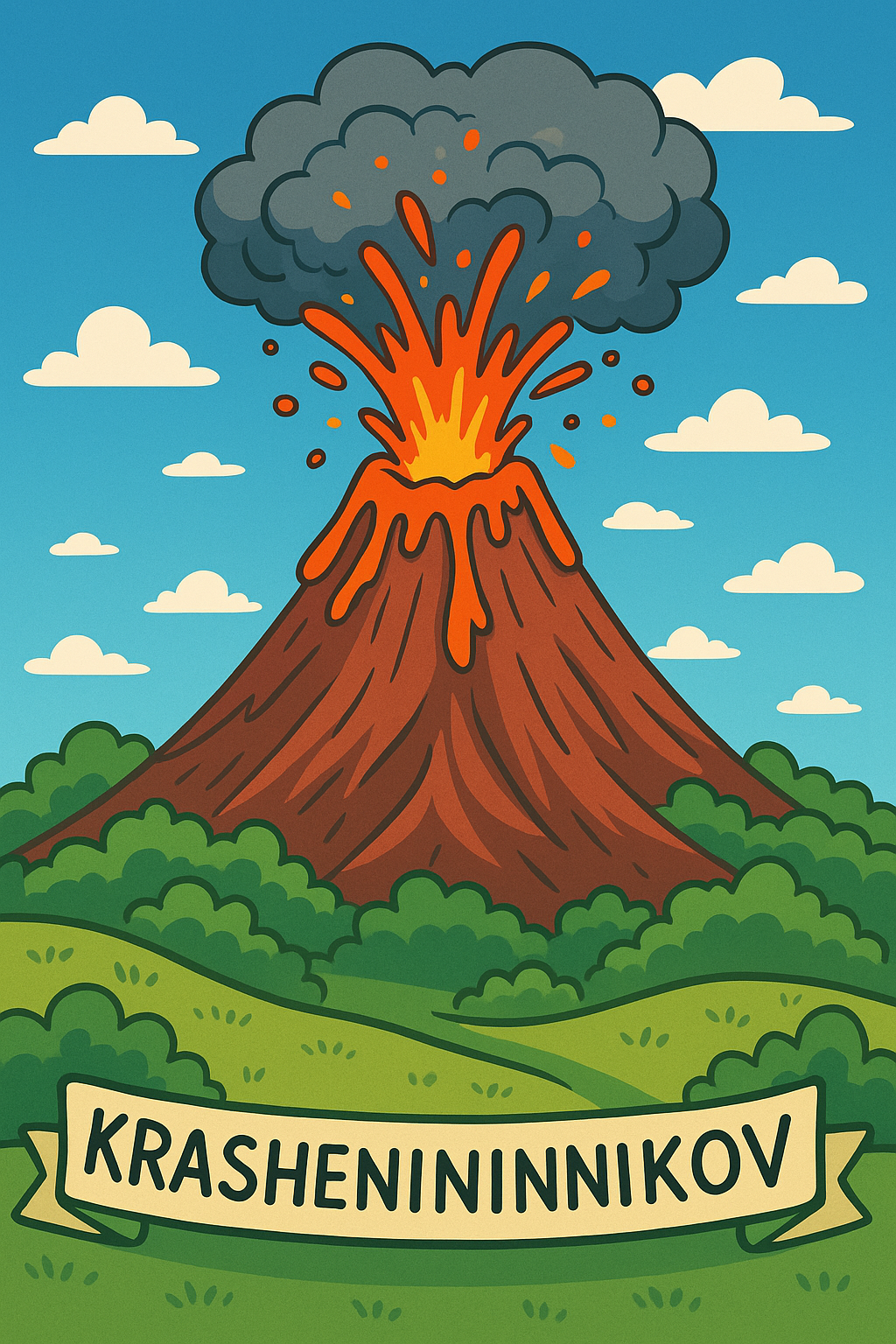
Days after the quake, Krasheninnikov Volcano erupted for the first time in nearly 600 years, and the nearby Klyuchevskoy volcano also became active, possibly triggered by seismic stress changes following the quake phys.org. The ash plume rose up to 6–8.5 km, prompting aviation alerts, although there was no threat to populated areas TIME.
Why Seismologists Are Watching Closely
The Kamchatka event is a textbook case for studying:
Megathrust rupture physics and stress transfer
Coupling between seismic and volcanic systems
Tsunami generation and sea-floor dynamics
Aftershock forecasting and emergency response scenarios
It adds to our collective understanding of subduction-zone hazards—vital for earthquake and tsunami preparedness globally.
Key Takeaways
M8.8 earthquake struck July 30, 2025, offshore Kamchatka at ~19 km depth
Tied as the sixth-strongest earthquake since 1900, biggest since 2011
Triggered tsunami waves up to 4 m and millions evacuated across the Pacific
Series of strong aftershocks and fore‑/mainshock activity
Corresponded with rare volcanic eruptions shortly after
No confirmed fatalities, limited damage due to remote location
Need Geoscience Coverage for Your Firm?
While VGSS doesn’t specialise in predicting or mitigating large-scale natural disasters like the recent record-breaking earthquake, we do specialise in delivering high-quality surveying and geoscience solutions across the mining, civil, and agricultural sectors. Get in touch today to find out how we can support your next project.